US inflation rises to 3.8% in October on the Federal Reserve's preferred gauge
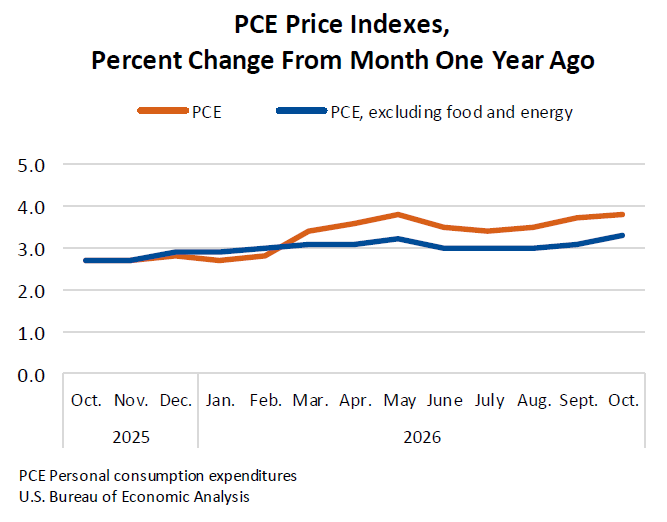
The PCE price index, the Federal Reserve's preferred measure of inflation, rose 3.8% in the year to October, up from 3.6% in September, the US Bureau of Economic Analysis said on Wednesday. Prices rose 0.3% in the month, and core prices, excluding food and energy, rose 3.3% over the year. Personal income rose 0.7% and consumer spending 0.3%, while spending adjusted for inflation was flat.
Key points
- The PCE price index rose 3.8% in the year to October, up from 3.6% in September, and 0.3% in the month itself.
- Core prices, excluding food and energy, rose 3.3% over the year and 0.3% in the month.
- Personal income rose 0.7% in October and consumer spending rose 0.3%; spending adjusted for inflation was flat, and the saving rate was 4.1%.
What happened
The Bureau of Economic Analysis said the increase in personal income mainly reflected higher pay, government social benefits — including one-time Medicare Improvement Fund premium rebate payments — and dividend income. The $63.8 billion rise in consumer spending was mostly services, up $52.1 billion, with goods up $11.8 billion.
The PCE index is the measure the Federal Reserve targets when it sets interest rates. CNBC reported that the acceleration to 3.8% likely seals a further rate increase at the Fed's December meeting; the central bank itself has announced no decision.
What we know / what we don't know yet
What we know
- The October figures themselves, from the Bureau of Economic Analysis's own release of 25 November 2026.
What we don't know yet
- What the Federal Reserve decides on interest rates in December.
- Whether November's figures, due on 23 December, keep inflation accelerating.
Claim by claim
Show all claims (4)
Why this label: The BEA's own estimates in its Personal Income and Outlays release for October 2026; the annual rate was 3.6% in September.
On the ladder: a claim earns Verified from primary evidence, or from two independent sources that do not copy each other.
Why this label: The core index from the same BEA release.
On the ladder: a claim earns Verified from primary evidence, or from two independent sources that do not copy each other.
Why this label: Current-dollar figures from the BEA release.
On the ladder: a claim earns Verified from primary evidence, or from two independent sources that do not copy each other.
Why this label: Real PCE and the saving rate from the BEA release.
On the ladder: a claim earns Verified from primary evidence, or from two independent sources that do not copy each other.
Why it matters
Inflation on the Fed's preferred gauge is moving away from its 2% target again, which shapes what the central bank does with interest rates in December — and, through borrowing costs, what households and businesses across the US economy pay.
Update history
No silent edits. Every change is written here, with its time.
- Latest
Published — the BEA's October 2026 figures, taken from the bureau's own release.